
Kaleem Ahmed Usmani
Purported AFRINIC Board Seat 3 / Indian Ocean under public-interest review for election-process reliance, cybersecurity-governance transparency, registry chokepoint accountability, anti-leasing posture, member-rights impact and public-answer status. The central danger for readers is control without clearly proven authority.
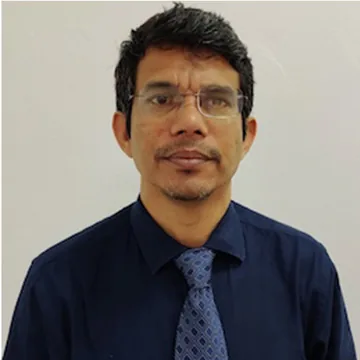
Cybersecurity credentials increase the duty to answer clearly.
A board-seat person with a national CERT and cyber-policy profile understands operational continuity, incident escalation and critical-infrastructure risk. That makes the public position on AFRINIC’s registry chokepoint especially important for members whose live networks depend on stable number-resource treatment.
Professional baseline
Published AFRINIC materials place Usmani in national cybersecurity, incident response, cyber policy, CERT coordination and regional / international cyber forums.
Authority dependency
Any later board action relies on the lawful effect and integrity of the election process that produced the purported Board seat.
Public-answer standard
The practical question is simple: support, reject, abstain, or no position on anti-leasing rhetoric, registry chokepoint use and member-rights reduction.
The danger is control without clearly proven authority.
Based on the public material available on nrs.help, this profile is not a personal misconduct finding. It explains why a reasonable reader should be concerned if Kaleem Ahmed Usmani — purported AFRINIC Board Seat 3 / Indian Ocean — exercises or supports AFRINIC registry control before the authority chain, election integrity and member-rights questions are transparently resolved.
Registry power can hit live networks.
NRS warns that operators who give customers dynamic IPs, static IPs, cloud public IPs, data-centre IP bundles, assignments or sub-allocations all depend on downstream address use. If that model is relabelled as suspect “leasing,” the pressure is no longer about one company; it can reach ordinary ISP, cloud, hosting, telecom, data-centre and IXP operations.
Authority must be traceable.
NRS frames the current problem as a disputed authority chain: the Receiver organised the election, the purported Board relies on that process, and communications are issued in AFRINIC's name while members still need to know who is lawfully empowered to speak and act for the registry.
Silence is a record gap.
NRS says questions were sent to named individuals and records no public answer received yet. For readers, the unresolved issue is whether Usmani supports, rejects, abstains from, or has no position on registry chokepoint pressure, anti-leasing rhetoric and member-rights reduction.
If Usmani participates in AFRINIC control without a clearly documented and validated mandate, the risk is operational: renewals, transfers, registry records, RPKI dependence, compliance narratives and public legitimacy can become pressure points before affected members have a fair chance to defend their networks.
The reasonable public request is simple. A named person should answer in their own name whether they support using AFRINIC's registry chokepoint against ordinary downstream address use and whether they accept acting before authority is properly validated.
A cybersecurity profile entered a disputed registry-governance moment.
The timeline records published facts and the points where NRS accountability questions attach.
CERT-MU leadership record claimed
The CV lists Usmani at the Computer Emergency Response Team of Mauritius from 2011 to date and describes Officer-in-Charge responsibilities covering CERT operations, SOC management, incident coordination and capacity building.
Cybersecurity and Cybercrime Act drafting record claimed
The candidate profile and CV say he spearheaded or led technical drafting of Mauritius’s Cybersecurity and Cybercrime Act 2021, aligned with international and African cybercrime frameworks.
Candidate slate and profile published
AFRINIC’s NomCom announced the 2025 Board candidate slate and directed community and resource members to the Election Portal for candidate details.
Electronic voting period
The slate announcement says electronic voting was scheduled from 10 September 2025 at 12:00 MUT to 12 September 2025 at 20:00 MUT via the Voatz platform.
Seat 3 result announced
AFRINIC result records list Mr Kaleem Ahmed Usmani as elected for Board Seat 3 / Indian Ocean.
Named as purported Board member
NRS names Usmani among the purported Board people behind the authority problem and records public questions about anti-leasing rhetoric, registry chokepoint power and who lawfully speaks for AFRINIC.
No public answer recorded by NRS
NRS records that questions were sent to named individuals and that no public answer had been received yet. This page preserves that as a public-answer gap, not a finding.
Accountability questions that need documents, not assumptions.
Each item is framed as a public-accountability risk, not a finding. Each issue should be backed by source documents before legal, regulatory or public escalation.
NRS is asking named individuals, not an abstract institution. A direct public answer narrows the record; silence expands the record gap.
A cyber-resilience profile should make registry-side operational risk, member rights and downstream address-use treatment explicit and attributable.
Separate public record from NRS accountability questions.
Public-source statements are linked below. The NRS control-risk framing is based on NRS Red Alert, NRS governance-vacuum / USD 100 liability warning, NRS election-integrity notice, and NRS regional-lock warning. This page should be read as a public-accountability profile, not as a legal judgment or unsupported personal allegation.
NRS red-alert page
Names Usmani as purported Board Seat 3 and records the public questions / no-answer status. Open source
NRS control-risk warning
Explains the structural-risk frame: registry control, legal insulation, regional lock-in and operational exposure for telecom, ISP, cloud, banking, IXP and government networks. Open source
NRS election-integrity notice
Records NRS's position that the September 2025 AFRINIC Board election has not been lawfully or conclusively completed and invites factual reports of voting irregularities. Open source
NRS regional-lock notice
Frames regional marking of AFRINIC-managed resources as a lock-in mechanism and links the risk to disputed board authority and member asset mobility. Open source
Usmani candidate profile
AFRINIC election page with photo, Seat 3, nationality, affiliation, position, motivation and biography. Open source
Usmani CV
Candidate CV describing CERT-MU role, memberships, work experience, education and cybersecurity projects. Open source
AFRINIC results
Official announcement listing Mr Kaleem Ahmed Usmani for Board Seat 3 / Indian Ocean. Open source
AFRINIC announce list
Mailing-list version of the election result announcement. Open source
Candidate slate
NomCom slate announcement and electronic voting period / Voatz platform note. Open source
Elected candidates
Election portal list of elected candidates and their seats. Open source
Image source
Portrait archived locally from AFRINIC Election 2025 public candidate materials. The original image source is currently unavailable.