
NRS public notice ·
Today they call it LARUS leasing. Tomorrow they can call your business illegal.
Your customers use IP addresses through your network. NRS argues that restrictions on downstream address use threaten the operating model of ISPs, cloud providers, hosting companies and other networks — and calls for a collective response.
Critical warning to AFRINIC Resource Members
If your customers use IP addresses through you, AFRINIC’s anti-leasing narrative is not someone else’s problem. It is your network, your customers, your revenue, and your survival.
Your business already depends on customers using addresses through you. By any serious commercial and legal reading, that is leasing or a lease-like right of use: the customer pays, you grant address use, and the service continues while the commercial relationship continues. AFRINIC’s claim in plain English is not anti-one business model. It is anti-Internet.
- Risk 01
- Your customer IP services are exposed.
- Risk 02
- Your renewals and transfers can be questioned.
- Risk 03
- Your statutory member rights are under attack.
- Risk 04
- You may fight alone when the registry moves.
⚠️ REGISTRY-LAYER RISK IS NOT THEORY • IT IS AN OPERATIONAL FAILURE PATH • ACT BEFORE YOU BECOME THE TEST CASE
The false frame
AFRINIC obtained an order against a claim LARUS did not make.
LARUS did not claim that the Supreme Court of Mauritius approved, endorsed, sanctioned, or authorised its customer products, leasing contracts, monetisation model, or business activity.
The interim order restrains false attribution of judicial approval. It is not a final judgment. It does not decide that IPv4 leasing is unlawful. It does not decide IP ownership. It does not reverse Cloud Innovation’s register/member position.
An injunction against a non-existent claim does not clarify the law. It manufactures a narrative. The real question is whether AFRINIC now wants to treat structured downstream use of Internet number resources as suspect.

Theme image: warning boundary — red sandstone cliffs, Heng Lu landscape photography.
This is your business model
If you provide connectivity, cloud, hosting, telecom, IXP or data-centre services, you already give customers address use.
Do not say “leasing is not my business.” Your business already depends on customers using addresses through you. That makes this inescapable.
This is IP leasing in plain English.
When your customer pays you every month and receives a dynamic IP, static IP, VPS IP, public cloud IP, business /29, data-centre IP add-on, downstream assignment, sub-allocation, peering LAN address, or bundled connectivity address, you are giving that customer an ongoing right to use Internet number resources. Call it assignment, delegation, bundled service, customer IP service or lease. The substance is the same.
If AFRINIC can attack that substance under the word “leasing,” no operator escapes. This is not about one LARUS product. It is about whether AFRINIC is prepared to weaponise its registry chokepoint against the normal way ISPs, cloud providers, hosting companies, telecoms, data centres and IXPs serve customers.
- ISP access
- Dynamic IPs, static IP add-ons, business broadband, /29s and /28s.
- Cloud and VPS
- Public IPv4 attached to instances, servers, containers, and managed workloads.
- Data centres
- Monthly IP add-ons, managed connectivity, customer IP bundles and firewall services.
- Telecom operators
- Enterprise circuits, MPLS Internet breakout, access networks and customer addressing.
- LIRs and downstream ISPs
- Assignments, sub-allocations, PA space, delegation and customer networks.
- IXPs and interconnection
- Peering LANs, participant addresses, route-server operations and shared infrastructure.

Theme image: isolated operator exposed to registry pressure — rocky peninsula, Heng Lu landscape photography.
No addresses, no business
Without downstream address use, the modern Internet stops selling services.
ISPs cannot sell Internet access. Cloud providers cannot sell servers. Hosting companies cannot sell websites. Telecom operators cannot deliver enterprise Internet. Data centres cannot sell managed connectivity. The Internet does not function if every end customer must become a direct RIR-facing resource holder.
AFRINIC must answer the real question.
Is AFRINIC prepared to leverage its registry chokepoint power to threaten, freeze, revoke, delegitimise, or destroy the Internet operations its own members actually run? If it can relabel ordinary customer address use as suspect “leasing” today, it can do the same to your static IP service, VPS IP, cloud public IP, data-centre IP bundle, enterprise circuit, downstream assignment, sub-allocation, renewal, transfer, or NIR access tomorrow.
This is not optional politics. If your revenue depends on customers using IP addresses through you, AFRINIC’s anti-leasing narrative is aimed at the operating logic of your business.
Mandate laundering
A disputed authority must not weaponise its chokepoint.
AFRINIC announced eight persons as elected to its 2025 Board: Abdelaziz Hilali, Emmanuel Adewale Adedokun, Kaleem Ahmed Usmani, Kayemba Laurent Ntumba, Carla Sanderson, Fiona Asonga, Benjamin Mark Roberts and Ajao Adewole David. The Receiver is Mr Gowtamsingh Dabee.
The Receiver organised the election. The purported Board relies on the Receiver’s process. The Receiver then relies on the purported Board’s support. Both act in AFRINIC’s name while NRS asks whether the lawful authority to speak for AFRINIC has been finally validated.

Theme image: critical infrastructure under red alert — skyline and river, Heng Lu landscape photography.
- Disputed election
- Receiver mandate confusion
- Purported Board authority
- Regional lock-in
- Bylaw rights removal
- Anti-leasing rhetoric
Public accountability
These are the named people behind the authority problem.
If communiqués are issued in AFRINIC’s name, members deserve to know who is personally standing behind them. The question is no longer abstract governance. It is whether this Receiver and this purported Board are prepared to use AFRINIC’s registry chokepoint power to threaten the Internet operations of the very members they claim to serve.

RECEIVER
Gowtamsingh Dabee
Receiver
Public professional profile / GD RICHES
Profile available →
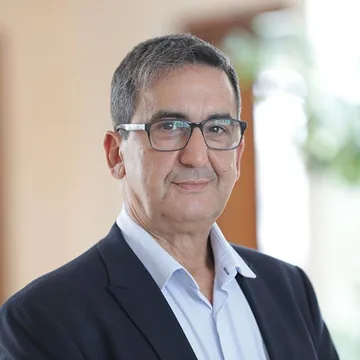
PURPORTED BOARD
Abdelaziz Hilali
Purported Board Seat 1 / Northern Africa
AFRINIC Election 2025 public photo
Profile available →

PURPORTED BOARD
Emmanuel Adewale Adedokun
Purported Board Seat 2 / Western Africa
AFRINIC Election 2025 public photo
Profile available →
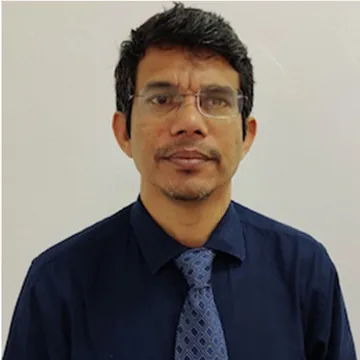
PURPORTED BOARD
Kaleem Ahmed Usmani
Purported Board Seat 3 / Indian Ocean
AFRINIC Election 2025 public photo
Profile available →
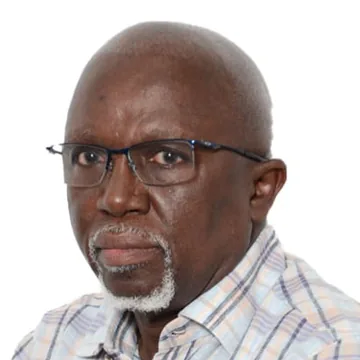
PURPORTED BOARD
Kayemba Laurent Ntumba
Purported Board Seat 4 / Central Africa
AFRINIC Election 2025 public photo
Profile available →
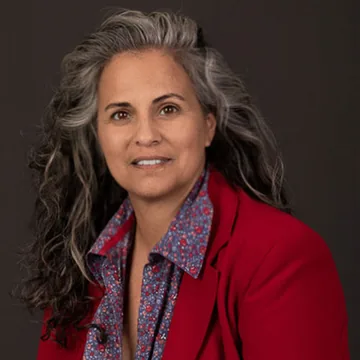
PURPORTED BOARD
Carla Sanderson
Purported Board Seat 5 / Southern Africa
AFRINIC Election 2025 public photo
Profile available →

PURPORTED BOARD
Fiona Asonga
Purported Board Seat 6 / Eastern Africa
AFRINIC Election 2025 public photo
Profile available →

PURPORTED BOARD
Benjamin Mark Roberts
Purported Board Seat 7 / Non-Regional
AFRINIC Election 2025 public photo
Profile available →

PURPORTED BOARD
Ajao Adewole David
Purported Board Seat 8 / Non-Regional
AFRINIC Election 2025 public photo
Profile available →
- Question 1
- Do you personally support using anti-leasing rhetoric against the ordinary address-use model every ISP, cloud provider, telecom and hosting company depends on?
- Question 2
- Are you personally prepared to let AFRINIC use its registry chokepoint power to threaten, freeze, delegitimise or destroy members’ live Internet operations?
- Question 3
- Who is lawfully speaking for AFRINIC today: the Receiver, the purported Board, or a circular combination of both?
No collective shield.
NRS is not asking an abstract institution. NRS is asking the named Receiver and each named purported Board member. If AFRINIC wants to turn normal address use into a chokepoint weapon, the people whose names appear on the governance structure must answer in their own names.
Silence will be recorded as no public dissent. Until a named person answers, operators should assume that person has not publicly rejected the communiqué, has not publicly rejected the anti-leasing narrative, and has not publicly rejected the attempt to push Resource Members away from statutory rights.
- Notice sent
- Questions sent to named individuals
- Answer status
- No public answer received yet
- Update policy
- Replies will be published here
- Member action
- Ask them directly before your business is next
Status note: NRS has sent these questions to the above individuals and has yet to receive an answer. This page will be updated if any response is received.
First: lock you in
Regional-lock policy reduces exit options for AFRINIC-managed resources. If exit and transferability disappear, members lose leverage before the rights question is decided.
Second: remove your rights
The ISPA-circulated draft says Resource Members and Associate Members are not Companies Act members and have no statutory member rights, while statutory Special Resolutions are reserved to Registered Members.
Third: threaten your operations
Today the target is called “LARUS leasing.” Tomorrow the same chokepoint power can be aimed at your VPS IP add-on, enterprise static-IP product, data-centre IP bundle, cloud public-IP service, renewal, transfer, customer assignment, sub-allocation, or NIR access. If customers use addresses through you, you are already inside the target zone.
Do not wait for your turn
If you stay silent because this is “not my problem,” you have already misunderstood the problem. If customers use addresses through you, there is no safe distance.
Most operators cannot survive a registry-side attack alone. One serious dispute can destroy customer confidence, freeze transfers, trigger compliance reviews, scare banks, damage financing, break sales, force renumbering, and create legal costs before the merits are even heard.
Cloud/LARUS is not the first target of registry overreach. It is the first survivor. Most members do not have the resources, legal infrastructure, or time to fight alone.

Theme image: network fragility under pressure — frozen lakes at sunset, Heng Lu landscape photography.
Immediate action required
Join NRS Shield before you become the next test case.
NRS Shield adds coordinated governance and legal protection in RIR matters without transferring your assets, company, or independent legal advice.
Direct link:
https://nrs.help/nrs-shield/
Email:
NRS-SHIELD@NRS.HELP
Discuss your network with NRS Shield
Prepare an email draft on this device, then review and edit it. Your details are sent to the NRS enquiry service only when you choose Send enquiry. This does not grant a POA or enrol your organisation in legal action.
Background materials
Read the documents behind the warning.
AFRINIC communiqué, 15 May 2026
AFRINIC’s public framing of the interim order.
NRS Shield
Coordinated governance and legal protection in RIR matters.
NRS voter-register verification notice
Election-integrity concern and member check.
NRS lock-in warning
Regional policy, exit rights and member leverage.
Heng Lu landscape photography
Landscape images used for the page visual system.
Red sandstone cliffs under clear sky
Hero and warning visual source.
Rocky peninsula surrounded by blue ocean
Isolation-risk visual source.
Sunset over frozen lakes and mountains
Fragility visual source.
GD RICHES profile of Gowtamsingh Dabee
Public professional profile source for the Receiver photo.
This page is a public-interest statement by NRS for AFRINIC Resource Members and Internet operators. It is not legal advice. Operators should obtain independent legal advice before taking legal or regulatory action.