
Number Resource Society
NRS Seminar in Bamako: Advancing IP Address Governance, Data Privacy and Digital Resilience
A report from the NRS seminar in Bamako on 13 August 2026: IP address governance, data privacy and the capacity of local networks to shape their digital future.
On this page
Event report: this seminar took place on 13 August 2026.
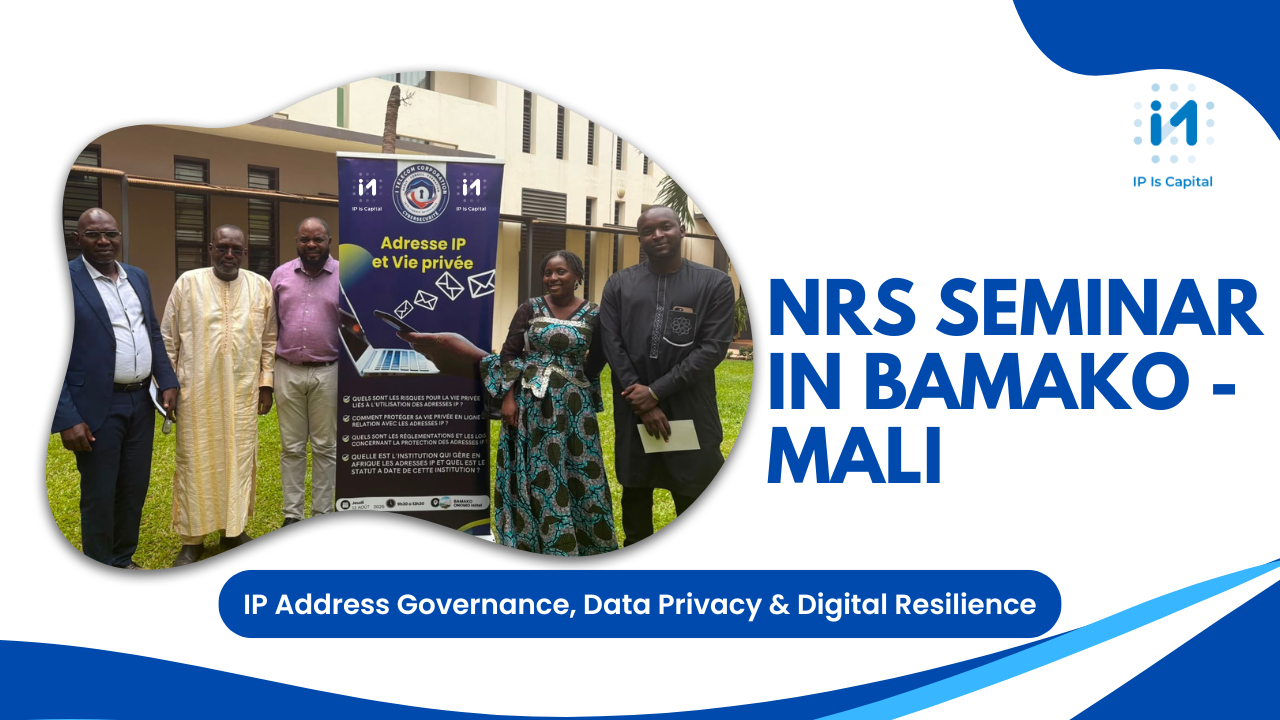
Event cover published with the original report.
Bamako, Mali | 13 August 2026
As Africa’s digital ecosystem continues to expand, the governance of Internet number resources is becoming increasingly important for businesses, Internet Service Providers (ISPs), research networks and other organizations that depend on reliable digital infrastructure.
On 13 August 2026, the Number Resource Society brought this conversation to Bamako, Mali, through a seminar focused on IP Address Governance and Data Privacy, with particular attention to the challenges and opportunities facing national ISPs and research networks.
Held from 9:00 AM to 2:30 PM at ONOMO Hotel Bamako, the seminar was organized by NRS, with BBC & Fils SARL serving as co-organizer and IT TÉLÉCOM as the local partner.
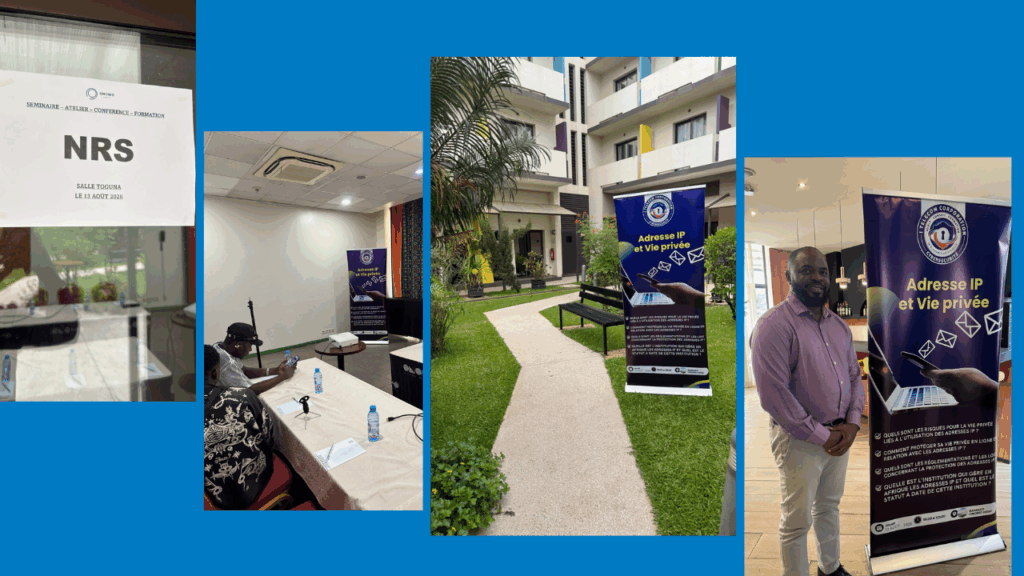
Seminar photographs published with the original report.
Putting IP address governance at the center of digital growth
IP addresses are fundamental to the operation of the Internet, yet questions surrounding who manages these resources, how they are allocated, and what organizations need to do to secure their long-term access are often overlooked.
The Bamako seminar provided an opportunity for local stakeholders to examine these issues from both technical and strategic perspectives.
Discussions explored IP address allocation policies and regional governance, helping participants understand how decisions made within regional Internet governance structures can affect national networks and organizations.
The seminar also examined the growing challenges associated with IPv4 exhaustion and the transition to IPv6. As available IPv4 resources become increasingly limited, organizations need to consider how their current IP strategies can support long-term growth and connectivity.
Data sovereignty and privacy in a connected world
As more services, applications and business operations move online, organizations are becoming increasingly dependent on digital infrastructure that crosses national and regional boundaries. This raises important questions about where data is hosted, who has control over it, and how organizations can maintain compliance with applicable regulatory requirements.
For ISPs and research networks in particular, effective resource management must go hand in hand with responsible approaches to data protection, privacy and digital governance.
The discussions highlighted the importance of understanding these issues not simply as technical concerns, but as strategic considerations that can influence organizational resilience and digital independence.
Building long-term security for ISPs
For national ISPs, the ability to maintain reliable access to Internet number resources is essential for operational stability and future growth.
Participants discussed the importance of long-term IP resource security, including the risks associated with excessive dependence on external policies and regional governance structures.
The seminar encouraged stakeholders to consider how they can take a more proactive approach to managing their Internet number resources and preparing for future demand.
This includes developing stronger internal technical capacity, understanding available governance mechanisms, and ensuring that IP resource management is incorporated into broader organizational planning.
Why registry membership matters
The importance of registry membership was another key area of discussion.
Active engagement with Internet number resource registries can give organizations greater insight into allocation policies, resource management processes and regional Internet governance.
For ISPs and other network operators, understanding these structures can help reduce uncertainty and support more informed decisions about their network resources.
The seminar therefore emphasized the strategic value of moving beyond simply using Internet resources to developing a deeper understanding of how those resources are governed and managed.
An Interactive exchange with local stakeholders
Beyond presentations, the Bamako seminar created space for open discussions and knowledge exchange with local ISPs and other stakeholders.
Participants explored several important questions, including:
- How can organizations strengthen their long-term access to IP resources?
- How do regional IP policies affect national network operators?
- What regulatory and compliance considerations should organizations be preparing for?
- How can local technical capacity be strengthened?
- How can stakeholders collaborate more effectively on Internet governance and digital infrastructure?
These conversations demonstrated a strong interest in developing greater local understanding of Internet number resource governance and its practical implications.
Strengthening local capacity and collaboration
One of the clearest takeaways from the seminar was the importance of capacity building.
Effective Internet governance requires more than policies and technical systems. It also requires people and organizations with the knowledge and expertise to participate meaningfully in discussions that shape the future of digital infrastructure.
Participants expressed interest in:
- Building a stronger understanding of IP governance frameworks
- Increasing local technical awareness and capacity
- Strengthening collaboration among industry stakeholders
- Exploring deeper and more structured engagement with Internet governance processes
These priorities point to an opportunity for continued dialogue, training and collaboration among stakeholders in Mali and across the wider regional digital ecosystem.
Looking ahead
The NRS Seminar in Bamako reinforced the importance of responsible Internet number resource management in supporting a resilient and sustainable digital future.
As organizations navigate IPv4 exhaustion, IPv6 adoption, data privacy requirements and evolving Internet governance policies, understanding the foundations of the Internet becomes increasingly important.
The seminar also demonstrated the value of bringing local stakeholders together to exchange knowledge, identify challenges and explore practical opportunities for collaboration.
For NRS, the engagement in Bamako represents another step toward strengthening awareness of IP resource ownership, governance, digital resilience and data privacy, while creating opportunities for continued capacity building and stakeholder engagement.
The conversation does not end with the seminar. It provides a foundation for deeper collaboration and continued efforts to ensure that organizations across the region are better equipped to understand, manage and participate in the governance of the digital infrastructure on which they depend.
The future of the Internet depends not only on connectivity, but also on informed participation, responsible governance and the capacity to manage the resources that make connectivity possible.
Continue the conversation
Explore the governance guides or contact NRS Shield about a specific resource problem. A representation mandate (POA) is a separate decision about scope, duration and withdrawal. Reading, attending an event or asking for help does not grant authority.
Internet governance introduction · Event archive · NRS Shield · POA and representation