
Fiona Asonga
Purported AFRINIC Board Seat 6 / Eastern Africa under public-interest review for election-process reliance, TESPOK and KIXP ecosystem proximity, registry chokepoint accountability, anti-leasing posture, member-rights impact and public-answer status. The central danger for readers is control without clearly proven authority.
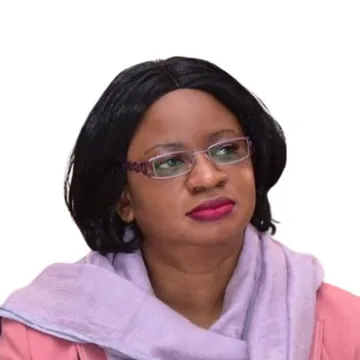
An IXP and industry-association leader sits next to the affected operator class.
A board-seat person whose published materials connect TESPOK, the Kenya Internet Exchange Point, industry CSIRT activity, policy advocacy and AFRINIC / ICANN number-resource governance understands how ordinary address use supports access networks, IXPs, hosting, cloud, telecom and downstream Internet service models. That makes the public position on anti-leasing rhetoric and member-rights reduction especially important.
Professional baseline
Published AFRINIC materials place Asonga in industry-association leadership, KIXP-related infrastructure work, cybersecurity coordination, policy advocacy and multi-stakeholder Internet governance.
Authority dependency
Any later board action relies on the lawful effect and integrity of the election process that produced the purported Board seat.
Public-answer standard
The practical question is simple: support, reject, abstain, or no position on anti-leasing rhetoric, registry chokepoint use and member-rights reduction.
The danger is control without clearly proven authority.
Based on the public material available on nrs.help, this profile is not a personal misconduct finding. It explains why a reasonable reader should be concerned if Fiona Asonga — purported AFRINIC Board Seat 6 / Eastern Africa — exercises or supports AFRINIC registry control before the authority chain, election integrity and member-rights questions are transparently resolved.
Registry power can hit live networks.
NRS warns that operators who give customers dynamic IPs, static IPs, cloud public IPs, data-centre IP bundles, assignments or sub-allocations all depend on downstream address use. If that model is relabelled as suspect “leasing,” the pressure is no longer about one company; it can reach ordinary ISP, cloud, hosting, telecom, data-centre and IXP operations.
Authority must be traceable.
NRS frames the current problem as a disputed authority chain: the Receiver organised the election, the purported Board relies on that process, and communications are issued in AFRINIC's name while members still need to know who is lawfully empowered to speak and act for the registry.
Silence is a record gap.
NRS says questions were sent to named individuals and records no public answer received yet. For readers, the unresolved issue is whether Asonga supports, rejects, abstains from, or has no position on registry chokepoint pressure, anti-leasing rhetoric and member-rights reduction.
If Asonga participates in AFRINIC control without a clearly documented and validated mandate, the risk is operational: renewals, transfers, registry records, RPKI dependence, compliance narratives and public legitimacy can become pressure points before affected members have a fair chance to defend their networks.
The reasonable public request is simple. A named person should answer in their own name whether they support using AFRINIC's registry chokepoint against ordinary downstream address use and whether they accept acting before authority is properly validated.
A Kenyan Internet-infrastructure profile entered a disputed registry-governance moment.
The timeline records published facts and the points where NRS accountability questions attach.
ICT-sector account-management role claimed
The AFRINIC CV lists an Account Manager and Marketing Executive role at Seven Seas Technologies Limited in Nairobi before Asonga moved into TESPOK.
TESPOK / KIXP administrator role claimed
The CV lists Administrator at Telecommunications Service Providers Association of Kenya / Kenya Internet Exchange Point, including office operations, member communication and document handling.
TESPOK CEO role claimed
AFRINIC materials say the TESPOK board created the CEO position in 2009, appointed Asonga in an acting capacity, and in 2010 appointed her Chief Executive Officer, a role the materials say she has held to date.
KIXP and CSIRT work claimed
The CV states that she helped position the Kenya Internet Exchange Point as a key regional exchange point and established the Kenya Industry Computer Security Incident Response Team at KIXP.
AFRINIC ASO-AC / NRO-NC service claimed
AFRINIC materials describe volunteer service as one of AFRINIC’s representatives to the Address Supporting Organization Address Council / Number Resource Organization Number Council.
Regional interconnection initiative claimed
The CV states that she coordinated the implementation and launch of Africa’s first Global Roaming Exchange with support from the African Union Commission AXIS Project.
UN IGFSA executive role claimed
The AFRINIC CV lists Executive Committee Member of the UN Internet Governance Forum Supporting Association from 2022 to date.
Global Cyber Alliance advisory role claimed
The CV lists Advisor to the President and Chief Executive Officer of the Global Cyber Alliance from 2023 to date.
Candidate slate and profile published
AFRINIC’s NomCom announced the 2025 Board candidate slate and directed community and resource members to the Election Portal for candidate details. Asonga’s candidate profile is dated 09 September 2025.
Electronic voting period
The slate announcement says electronic voting was scheduled from 10 September 2025 at 12:00 MUT to 12 September 2025 at 20:00 MUT via the Voatz platform.
Seat 6 result announced
AFRINIC result records list Mrs Fiona Asonga as elected for Board Seat 6 / Eastern Africa.
Named as purported Board member
NRS names Fiona Asonga among the purported Board people behind the authority problem and records public questions about anti-leasing rhetoric, registry chokepoint power and who lawfully speaks for AFRINIC.
No public answer recorded by NRS
NRS records that questions were sent to named individuals and that no public answer had been received yet. This page preserves that as a public-answer gap, not a finding.
Issues requiring an explicit public answer or preservation record.
Each item is framed as an accountability question, evidence target, or NRS public-interest concern unless supported by a formal finding.
NRS is asking named individuals, not an abstract institution. A direct public answer narrows the record; silence expands the record gap.
When a public profile is built around an Internet exchange point, industry CSIRT and operator association, the position on downstream address use should be explicit and attributable.
Separate public record from NRS accountability questions.
Public-source statements are linked below. The NRS control-risk framing is based on NRS Red Alert, NRS governance-vacuum / USD 100 liability warning, NRS election-integrity notice, and NRS regional-lock warning. This page should be read as a public-accountability profile, not as a legal judgment or unsupported personal allegation.
NRS red-alert page
Names Fiona Asonga as purported Board Seat 6 and records the public questions / no-answer status. Open source
NRS control-risk warning
Explains the structural-risk frame: registry control, legal insulation, regional lock-in and operational exposure for telecom, ISP, cloud, banking, IXP and government networks. Open source
NRS election-integrity notice
Records NRS's position that the September 2025 AFRINIC Board election has not been lawfully or conclusively completed and invites factual reports of voting irregularities. Open source
NRS regional-lock notice
Frames regional marking of AFRINIC-managed resources as a lock-in mechanism and links the risk to disputed board authority and member asset mobility. Open source
Asonga candidate profile
AFRINIC election page with photo, Seat 6, nationality, residence, affiliation, position, motivation and biography. Open source
Asonga CV
Candidate CV describing TESPOK, KIXP, CSIRT, AFRINIC ASO-AC / NRO-NC, Global Cyber Alliance and UN IGFSA experience. Open source
AFRINIC results
Official announcement listing Mrs Fiona Asonga for Board Seat 6 / Eastern Africa. Open source
Candidate slate
NomCom slate announcement and electronic voting period / Voatz platform note. Open source
Elected candidates
Election portal list of elected candidates and their seats; the portal lists Fiona Asonga for Seat 6. Open source
Election guidelines
AFRINIC Election 2025 guidelines explaining the seat structure and the board-reconstitution purpose of the election. Open source
Image source
Portrait archived locally from AFRINIC Election 2025 public candidate materials. The original image source is currently unavailable.