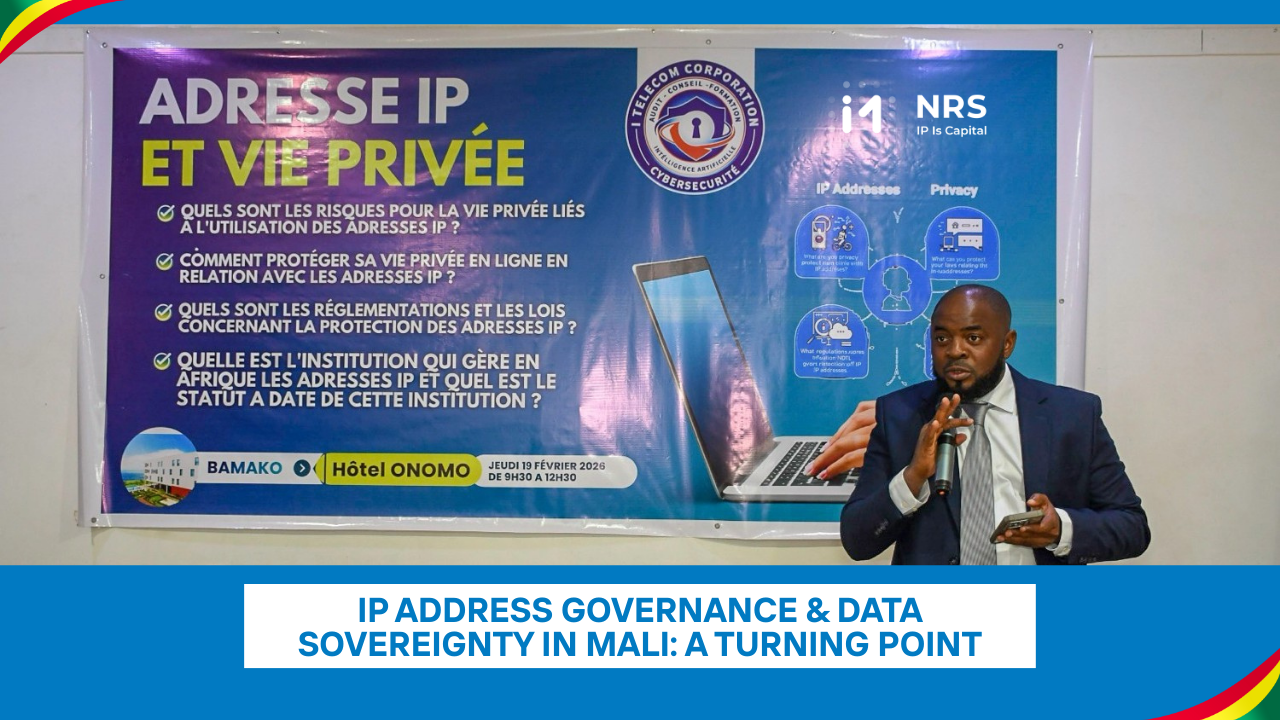
At the Onomo Hotel Bamako, something important happened.
This wasn’t just another telecom seminar. It was a signal.
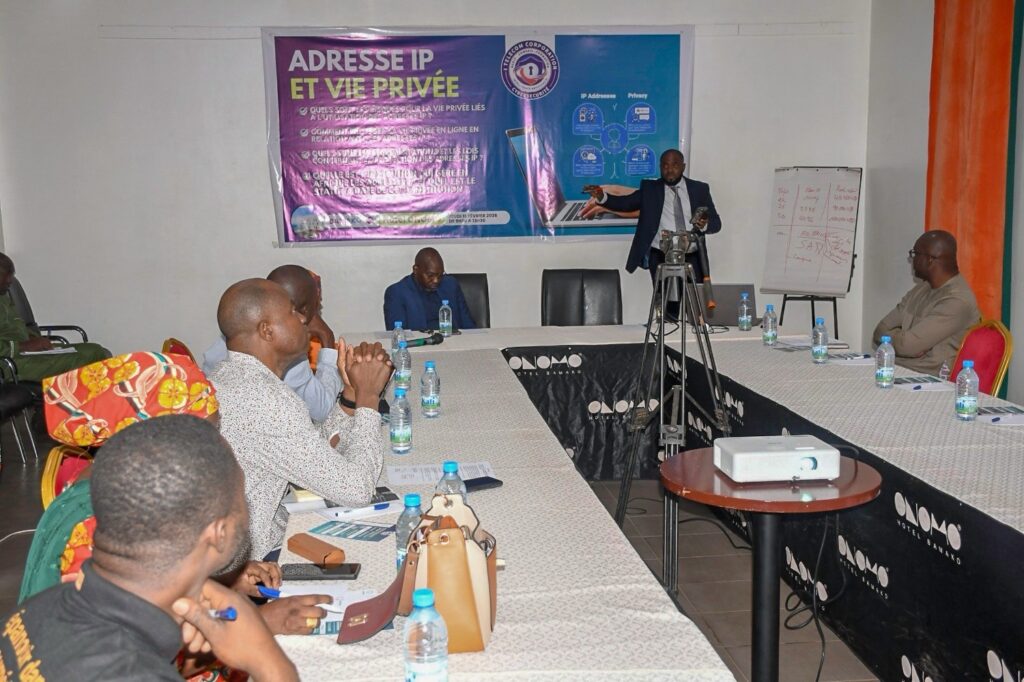
Organized by BBC & Fils SARL in partnership with IT TÉLÉCOM, the seminar on IP Address Governance and Data Privacy brought together the decision-makers shaping Mali’s digital future. And the conversations made one thing clear:
The era of passive dependency is ending.
The Real Conversation: Control, Stability, and the Future of the Internet
The sessions cut straight to the issues that matter:
- IP address allocation policies and regional governance
- IPv4 exhaustion and transition strategies toward IPv6
- Data sovereignty and privacy risks
- Operational stability for ISPs
- The strategic importance of registry membership
This was not abstract theory but operational reality. Local ISPs asked direct, pointed questions:
- How dependent are we on regional policy decisions?
- What does long-term IP resource security actually look like?
- Are we prepared for regulatory and compliance shifts?
These are not beginner questions. They are boardroom questions.
A Market Waking Up
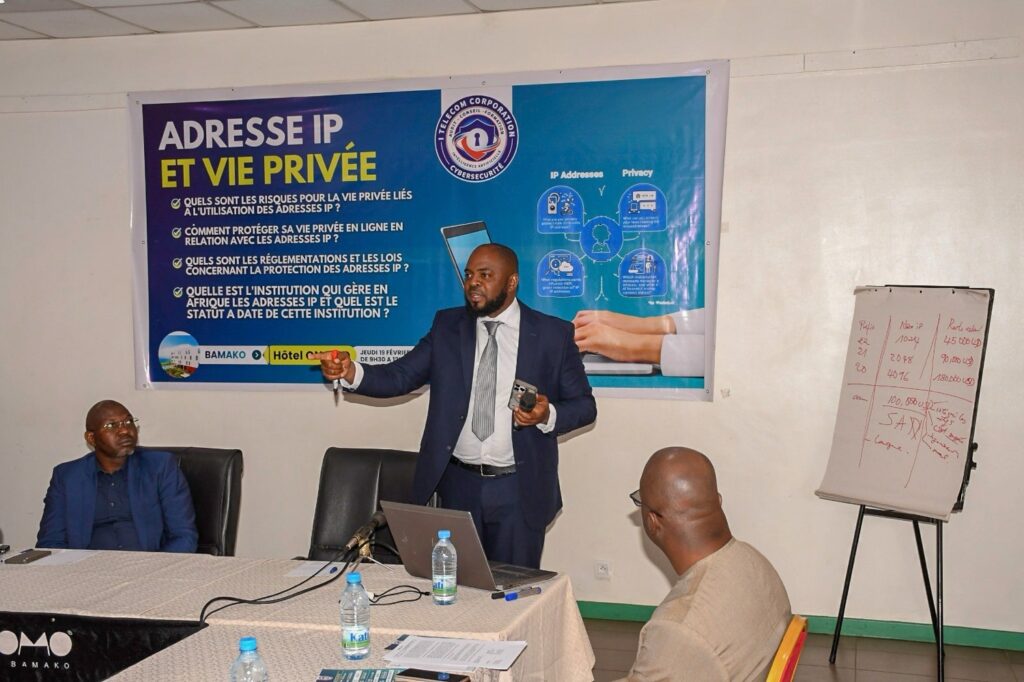
Mali has roughly 10–30 operating ISPs, and several were present alongside telecom professionals, infrastructure decision-makers, and representatives connected to national research and education networks.
Engagement was not passive. It was active, with multiple Q&A exchanges, openly discussed operational challenges, and networking conversations that extended beyond the formal session.
The appetite was clear: there is growing awareness that IPv4 exhaustion is not theoretical and that IPv6 transition planning can no longer be postponed.
But caution remains, as decision-making cycles here are relationship-driven; trust precedes commitment, and formal agreements follow credibility.
And that is exactly where strategic positioning matters.

What Became Clear
Three insights stood out:
- Awareness is rising.
ISPs understand that IP governance frameworks affect their balance sheets, not just their routers. - Stability matters more than speed.
Operators are cautious – but deeply interested in long-term resource security. - Capacity building is essential.
There is a clear need for structured education, ongoing dialogue, and regional coordination.
The seminar did more than inform; it positioned us as a strategic and technical reference point in the Malian ecosystem.
Beyond the Seminar: Momentum Is Building
This was not a one-day engagement.
- Multiple follow-up discussions have already begun with additional ISPs.
- Collaboration opportunities were identified for deeper technical sessions and structured awareness workshops.
- Direct interest was expressed for continued engagement on governance and IP allocation frameworks.
That is not passive attendance; that is traction.
The Bigger Picture: Why Mali Matters
Mali is a developing but evolving telecom market.
Its infrastructure is expanding, its operators are professionalizing, and its awareness of sovereignty, privacy, and governance risks is increasing.
What stood out most was not the questions; it was the opportunity.
- The need for structured follow-up, not one-off presentations.
- The importance of trust-building before formal commitments.
- The strategic potential of sustained regional coordination.
In markets like Mali, momentum compounds, education leads to clarity, clarity leads to alignment, and alignment leads to conversion.
This Is What Strategic Engagement Looks Like
This seminar was not about slides but about positioning.
It demonstrated that IP governance is no longer a niche technical issue; it is a strategic priority for national ISPs and research networks.
Mali is paying attention, and the ecosystem is listening. The next phase will be defined not by awareness, but by action.
The question is no longer whether governance matters.
The question is:
Who will help shape it?
Learn more on IP Is Capital – nrs.help