
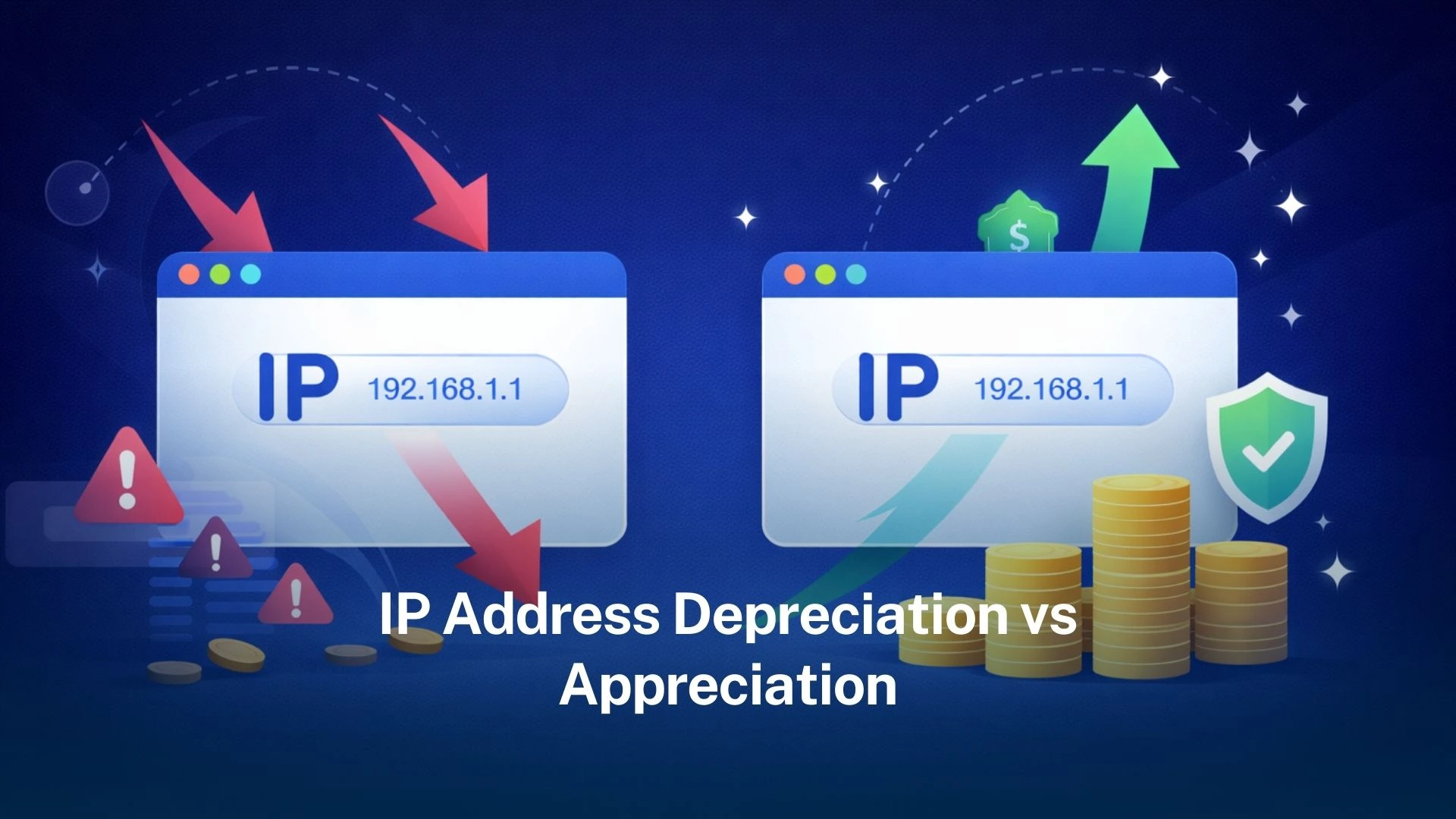
- IPv4 scarcity has transformed numerical internet addresses into tradable digital assets with fluctuating market value.
- Organisations such as the Number Resource Society (NRS) advocate governance and ownership reforms in the IPv4 landscape.
What happened
IPv4 value dynamics in an era of Scarcity
As the pool of free Internet Protocol version 4 (IPv4) addresses runs dry, organisations, markets and governance advocates are grappling with a complex dynamic: should IPv4 addresses be viewed as depreciating legacy resources or appreciating digital assets? With only about 4.3 billion unique IPv4 addresses created under the original 32-bit design, the address space has long since been exhausted by regional Internet registries (RIRs), leading to scarcity and secondary market activity.
Table of Contents
ToggleThis deep dive explores how IPv4 address values ebb and flow, the factors that drive depreciation versus appreciation, and why groups such as the Number Resource Society (NRS) are pushing for new frameworks in Internet number resource governance.
Internet Protocol version 4 (IPv4) is the foundational protocol that underpins most modern internet traffic, using 32-bit numerical identifiers to locate and route devices on the network. Because the design only allows for roughly 4.3 billion unique public addresses, the stock of freely allocatable IPv4 has been completely used up for more than a decade.
After exhaustion, RIRs — such as ARIN in North America and RIPE NCC in Europe — have handed out the last blocks and can no longer supply fresh IPv4 space. This structural scarcity underpins current debates over valuation and use.
What Drives Appreciation in the IPv4 Market
Scarcity economics
Scarcity is the fundamental driver behind IPv4 value appreciation. Because no new free allocations are possible, organisations that need publicly routable IPv4 space must acquire it through transfers or secondary markets. Recent commentary from IPv4 market analyses shows that prices per address rose dramatically over the past decade — from single-digit dollar values to tens of dollars per address.
Market data from early 2026 indicates that purchase prices for IPv4 addresses have stabilized in the range of $35 to $52 per address. While large blocks have seen some volatility, smaller subnets remain in high demand due to their accessibility for mid-market enterprises.
Clean Reputation and Governance
Not all IPv4 blocks are equal. Research from governance advocates suggests blocks with clean routing history and strong operational governance carry higher long-term value, because they avoid technical and reputational costs when deployed. This effect can make well-managed blocks a form of infrastructure asset, not merely a technical necessity.
Forces Pushing Toward Depreciation
IPv6 Adoption
The successor protocol, IPv6, was designed to overcome the address limitations of IPv4. While IPv6 adoption has grown steadily, many parts of the internet still rely on IPv4 interoperability. As IPv6 becomes more widespread, the relative importance of IPv4 could diminish long-term, which might reduce demand and, consequently, value.
Technological Substitution
Technologies such as carrier-grade NAT (CGNAT) allow multiple users to share a single public IPv4 address, reducing pressure on address consumption and potentially weakening the direct market value of individual addresses. While this doesn’t negate scarcity, it offers an alternative cost-control mechanism that might temper appreciation.
The Secondary Market and Valuation Dynamics
Unlike traditional commodities, IPv4 addresses are not “owned” in a legal sense; RIRs assign usage rights and maintain registries, and transfers are governed by regional policies. Over time, a secondary market has developed where organisations broker the transfer of address blocks, often in response to specific operational needs.
In earlier years, prices of IPv4 addresses soared as scarcity became explicit — for example, analysts charted a rise from around USD 8 to more than USD 60 per address at the market peak in 2021-2022 before settling into current levels.
This mirrors traditional asset valuation: while scarcity tends to push prices up (appreciation), the emergence of alternatives (such as IPv6 and address sharing technologies) or regulatory changes could depress value (depreciation).
NRS and the governance perspective
What is NRS
The Number Resource Society (NRS) is a global non-profit membership organisation that campaigns for businesses to treat their IP addresses as essential capital. In late 2025, NRS updated its core positioning to emphasize that “IP is Capital,” advocating for decentralized and transparent internet governance.
Critically, NRS contends that current RIR structures mean actual control over IPv4 resource rights resides with policy specialists rather than enterprises that operate the networks. It argues for clearer ownership rights and a freer market for IP address resources.
NRS on Infrastructure Value
NRS positions IPv4 addresses as infrastructure capital rather than ephemeral technical identifiers, noting that scarcity has transformed them into valuable assets that can support enterprise strategy and growth planning. By shifting the focus from “ownership” to “capital,” NRS aims to align technical resource management with broader corporate valuation and revenue goals.
Expert voices on IPv4 value
Market commentary consistently shows that scarcity has elevated IPv4 addresses from technical infrastructure to significant commercial value. Industry brokers and market facilitators advise organisations to weigh strategic acquisition of address blocks against long-term deployment of IPv6 and other technologies.
Analysts note that while the market is currently mature and stable, external factors such as government infrastructure funding (e.g., BEAD in the U.S.) may drive renewed upward price.
Balancing depreciation and appreciation
The valuation of IPv4 addresses is not binary. In the short term, scarcity, market demand and network requirements support price appreciation. In the longer term, technological evolution and alternative addressing mechanisms may erode demand, leading to depreciation pressures.
Organisations that hold clean, well-managed address blocks may continue to extract value — whether through strategic leasing, operational use or financial planning — while the broader internet ecosystem transitions toward IPv6 and beyond.
Frequent Asked Questions
IPv4’s 32-bit design provides about 4.3 billion addresses, all of which have been allocated, meaning no new free supply is available — a classic scarcity scenario driving market value.
Organisations transfer usage rights for IPv4 blocks through brokers and policies defined by RIRs, often at prices that reflect demand and block characteristics.
The Number Resource Society advocates for decentralised governance and treats IP number resources as capital, aiming to make the market more transparent and equitable for businesses.
Yes — as IPv6 adoption grows and technologies like NAT reduce dependence on IPv4, demand (and price) for IPv4 addresses could decline.
Under current systems, RIRs allocate and register IPv4 resources; enterprises hold usage rights, not full legal title, which complicates traditional ownership claims.