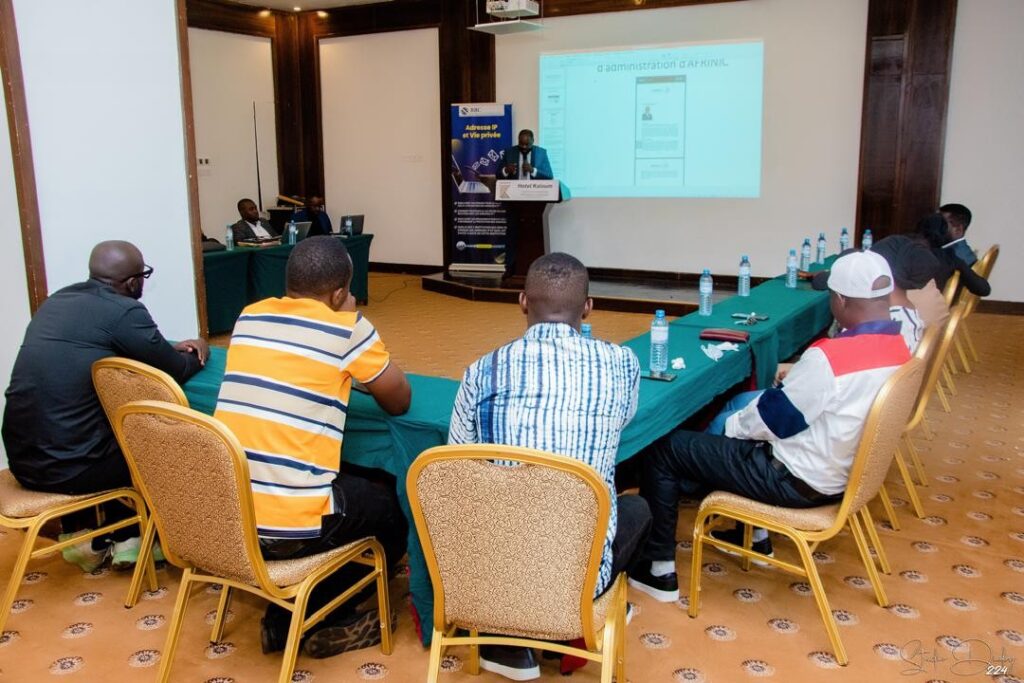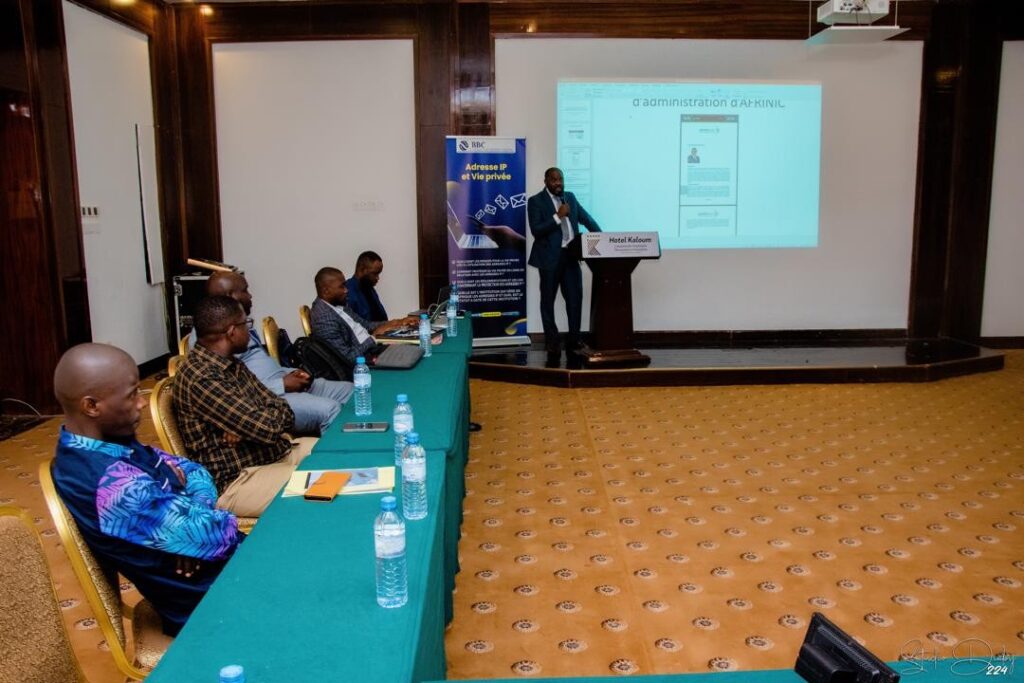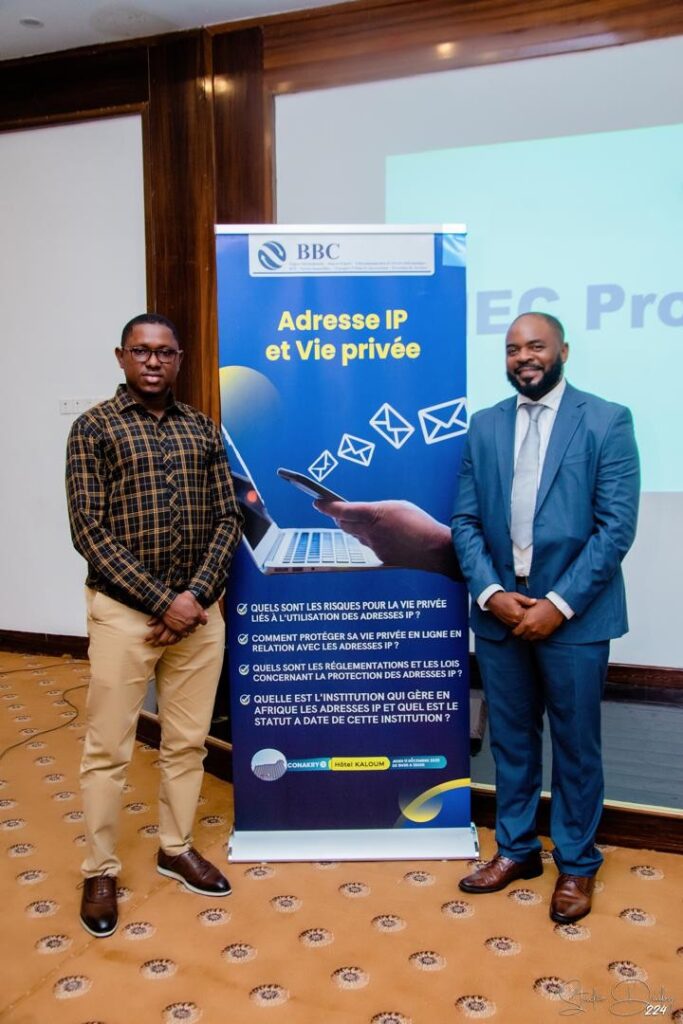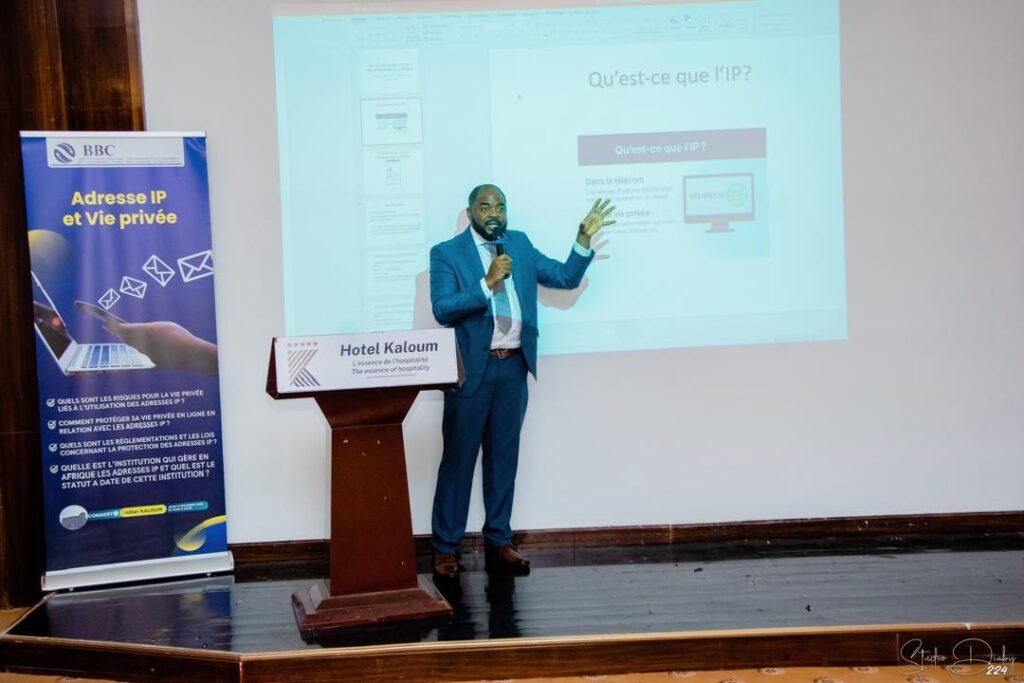

As Guinea’s digital economy continues to expand, conversations around IP addresses, data protection, and online privacy are becoming increasingly urgent. On 11 December 2024, key stakeholders from Guinea’s internet and telecommunications ecosystem gathered in Conakry for a high‑level dialogue on IP Address & Privacy.
Hosted at the Kaloum Hotel and organised by BBC in partnership with NRS, the event created a critical space for technical experts, Internet Service Providers (ISPs), and policy‑adjacent actors to examine how IP addresses are reshaping conversations around personal data, surveillance, and digital rights in Guinea.
A Strategic Gathering of Guinea’s Digital Stakeholders
The event convened representatives from some of Guinea’s most influential digital and telecommunications organisations, including: VDC, SkyVision, GuiLab, KAGNY, and Mouna Group
The audience was composed primarily of ISPs, telecommunications professionals, and sector specialists, creating a room rich in operational experience and technical depth. Discussions were practical, informed, and grounded in the realities of managing internet infrastructure in a rapidly digitising environment.
What distinguished this gathering was the high level of expertise among participants. Rather than introductory conversations, the dialogue explored real‑world challenges at the intersection of internet governance, privacy, and network operations.
Why IP Addresses Are Now Considered Personal Data
A central theme of the discussion was the evolving understanding of IP addresses as identifiable personal data.
Once viewed solely as technical routing identifiers, IP addresses are now widely recognised as sensitive digital markers. They can reveal:
- A user’s approximate geographic location
- Their Internet Service Provider (ISP)
- Patterns of online behaviour and activity
In effect, an IP address functions as a digital fingerprint—often collected silently, yet capable of exposing significant personal information. As internet usage in Guinea continues to rise, this reality increases citizens’ exposure to tracking, profiling, and potential misuse of personal data.
Participants acknowledged that understanding this shift is essential not only for regulators, but also for ISPs, network operators, and digital service providers responsible for handling user data.
Privacy Protection in Guinea: Progress and Persistent Gaps
Another critical insight from the event centred on the state of privacy protection frameworks in Guinea.
While legal and regulatory mechanisms for personal data protection are evolving, they remain insufficiently understood by the general public. Many internet users are unaware that their IP addresses can be collected, processed, and stored—often without fully informed consent.
This lack of awareness creates a structural vulnerability. Users participate in the digital economy without clear visibility into how their data is handled, while service providers face increasing responsibility to balance operational needs with ethical data practices.
The discussions reinforced the need for:
- Greater public awareness around digital privacy
- Stronger institutional capacity for data protection
- Proactive privacy‑by‑design approaches within network operations
From Technical Dialogue to Ethical Responsibility
Beyond policy and infrastructure, the event sparked a deeper reflection on ethical responsibility in the digital ecosystem.
Participants emphasised that privacy is no longer a purely legal issue; it is a technical, operational, and moral concern. Decisions made at the network level directly affect citizens’ rights, trust, and safety online.
This shift in perspective marked one of the most powerful outcomes of the event. The dialogue did not simply inform; it reshaped understanding, encouraging stakeholders to see IP management as a cornerstone of responsible internet governance.
Outcomes, Commitments, and Emerging Partnerships
The event concluded with formal commitments and strengthened partnerships, demonstrating a shared determination to sustain momentum beyond the session.
Stakeholders expressed collective intent to:
- Promote responsible handling of IP‑related data
- Advocate for stronger privacy awareness among users
- Support collaborative efforts that align technical operations with ethical standards
These outcomes signalled a clear move from conversation to action—an essential step in building a privacy‑conscious digital environment in Guinea.
Shaping a Trust‑Centred Digital Future for Guinea
The IP Address & Privacy dialogue in Conakry marked a defining moment in Guinea’s digital journey. It highlighted that internet growth must be matched with accountability, transparency, and user protection.
As connectivity expands, the challenge ahead is clear: ensuring that digital infrastructure empowers citizens without compromising their rights. Events like this, driven by collaboration between organisations such as BBC and NRS, play a vital role in shaping an internet that is not only accessible, but also ethical, secure, and trustworthy.
Guinea’s digital future is being built today, and the conversations held in Conakry are helping ensure it is built on a foundation of privacy, responsibility, and trust.